The Sacred Monogram (IHS)
IHS comes from the first three letters of the name Jesus in Greek. It is the emblem of the Holy Name and of the Jesuits.
What the Sacred Monogram (IHS) means
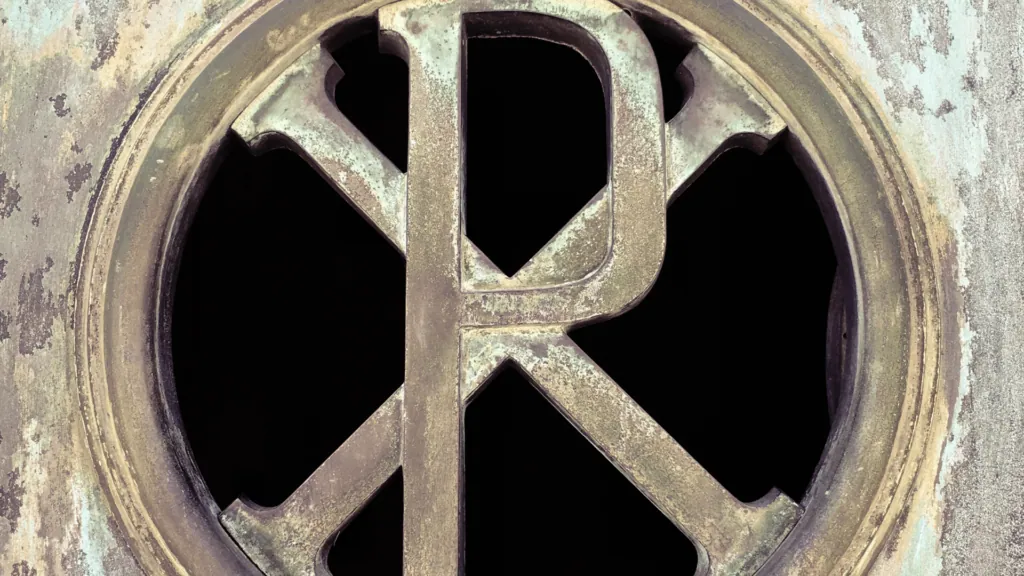
IHS is a monogram of the name of Jesus, taken from the first three letters of his name in Greek, iota, eta and sigma (ΙΗΣ), written in Latin letters. Popular readings such as Iesus Hominum Salvator ("Jesus, Savior of Men") or In Hoc Signo ("in this sign") are later explanations, not the origin. You see it on altars, vestments and hosts.
HistoryThe Catholic Encyclopedia reports that the monogram is first found on a gold coin of the eighth century. Devotion to it spread in the fifteenth century through St. Bernardine of Siena (1380 to 1444), who preached holding a wooden tablet painted with IHS surrounded by rays and urged people to place the monogram over city gates and house doors. When he was accused before Pope Martin V, the pope permitted the devotion and joined a procession carrying the monogram. Bernardine's tablet is venerated at Santa Maria in Ara Coeli in Rome.
The Jesuits made the monogram the emblem of their Society, adding a cross above the H and three nails beneath it. Behind every form of the symbol is the name itself, which means "YHWH saves." The Catechism teaches that the name of Jesus contains everything: God and man and the whole economy of creation and salvation (CCC 2666).