The Chi-Rho
X and P, the first two Greek letters of Christos, joined as a monogram of Christ and made famous by Emperor Constantine.
What the Chi-Rho means
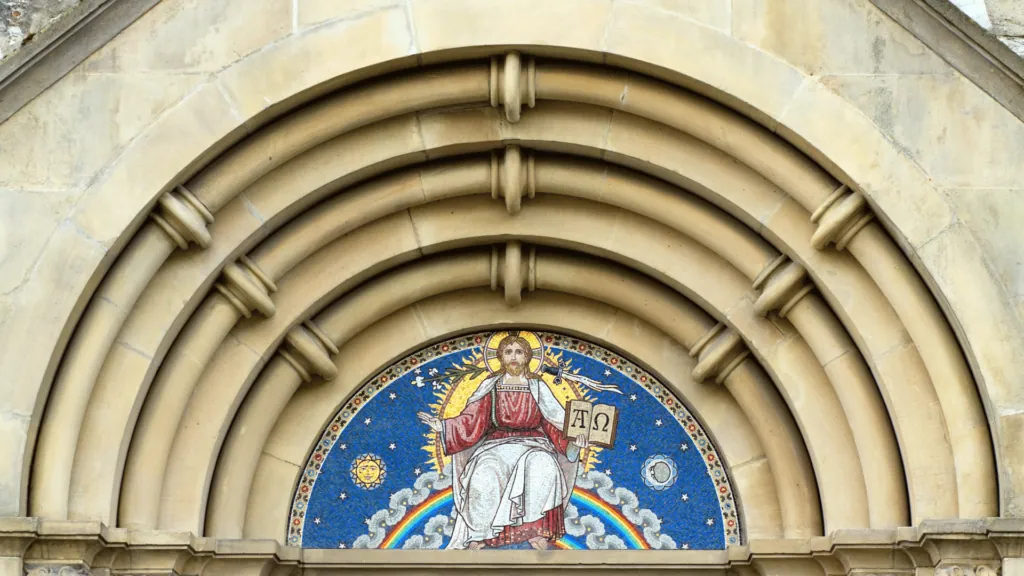
The Chi-Rho is a monogram made from the first two letters of the Greek word for Christ, ΧΡΙΣΤΟΣ: chi (X) and rho (P). The P usually stands upright with the X crossing its stem. The Greek letters Alpha and Omega are often set beside it, and among early monuments that show Alpha and Omega, most pair them with this monogram.
The monogram was already a familiar Christian sign before Constantine. Its fame comes from his campaign of 312. Lactantius writes that before the battle at the Milvian Bridge the emperor was told in a dream to mark the heavenly sign on his soldiers' shields: the letter X with a line drawn through it and turned round at the top, the cipher of Christ.
Eusebius, Constantine's biographer, describes a cross of light seen above the sun with the words "Conquer by this," and a standard, the labarum, made of a gold-covered spear with a crossbar and topped by a wreath enclosing the Chi-Rho. The Greek words are usually given in Latin as In hoc signo vinces. Constantine later wore the letters on his helmet, and the monogram spread to coins, standards and tomb inscriptions.