Cross and Crucifix
The cross recalls Christ's death and resurrection. A crucifix adds his figure and is required on or near the altar at every Mass.
What the Cross and Crucifix means
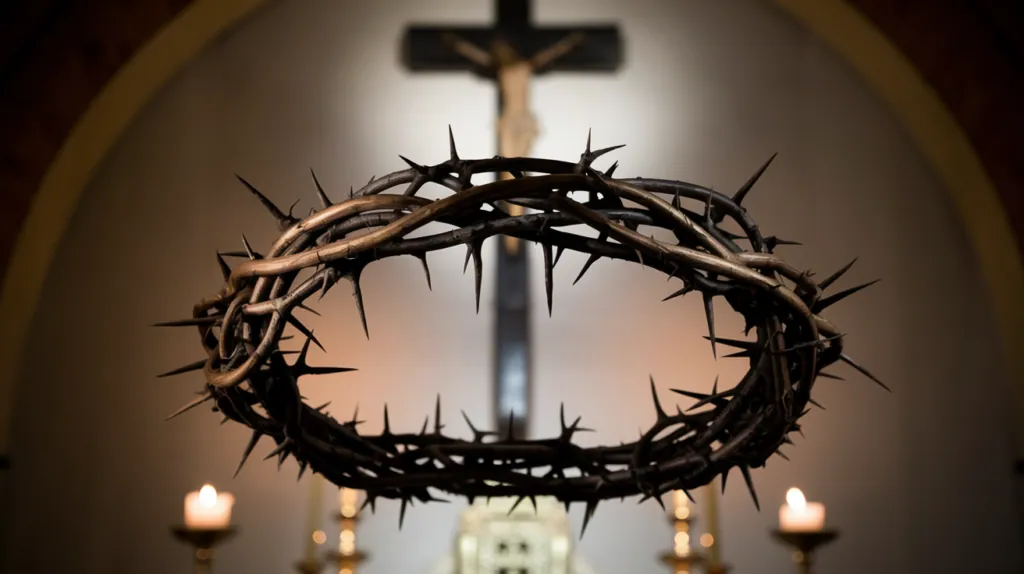
A cross is the bare shape; a crucifix is a cross that bears the figure of Christ crucified. For every Mass the Church calls for a cross with the figure of Christ crucified on the altar or near it, where the congregation can clearly see it, and it is fitting for that cross to stay near the altar outside Mass too, because it calls to mind the Lord's saving Passion (General Instruction of the Roman Missal 308).
The cross was the instrument of suffering on which Christ died and redeemed the world. In Catholic teaching the word also stands for any hardship a Christian freely accepts in order to be joined with Christ, following his call to take up one's cross and follow him (Matthew 16:24).
HistoryDuring the centuries of persecution the plain cross is almost absent from Christian monuments. The Catholic Encyclopedia dates the first open display of the cross to the early fifth century, and the undisguised figure of Christ on the cross to the close of the fifth century or the middle of the sixth. A pagan graffito from Rome's Palatine Hill that mocks a Christian with the words "Alexamenos adores God" shows a crucified figure, which suggests Christians already used images of the Crucifixion in private devotion by the third century.