The Historical and Biblical Roots of Unleavened Bread in Catholicism

Unleavened bread, also known as matzah, has a long and rich history intertwined with both Judaism and Catholicism. Its origins can be traced back to the Jewish Passover, a pivotal event commemorated annually by Jewish people. The story recounts the Israelites’ hurried exodus from Egypt, leaving them no time to let their bread rise. This act of haste became a symbol of liberation and a reminder of their ancestors’ journey to freedom. From its humble beginnings as a staple of the Jewish Passover, unleavened bread found its way into the Christian tradition through the Last Supper, a pivotal event in the life of Jesus Christ.
The Last Supper and the Origins of the Eucharist
During the Last Supper, Jesus shared a meal with his disciples, instituting what would become known as the Eucharist, a central element of Christian worship. Matthew, Mark and Luke present the meal as a Passover supper, so the bread he blessed is generally understood to have been unleavened, further cementing the connection between this simple food and the Christian faith. This act became a symbolic representation of Jesus’ sacrifice, a foreshadowing of his death and resurrection, and a powerful reminder of his presence in the lives of his followers.
“Jesus took bread, and when he had given thanks, he broke it and gave it to his disciples, saying, ‘Take, eat; this is my body.’ Then he took the cup, and when he had given thanks, he gave it to them, saying, ‘Drink from it, all of you. For this is my blood of the covenant, which is poured out for many for the forgiveness of sins.”
– Matthew 26:26-28
The Evolution of Unleavened Bread in the Early Church
History does not tell us for certain what kind of bread the apostles and their first successors used at the Eucharist. The Catholic Encyclopedia judges it probable that they “made use of whatever bread was at hand,” leavened or unleavened. The Gospels themselves leave room for debate: Matthew, Mark and Luke present the Last Supper as a Passover meal, while John follows a different timeline.
Over the centuries, different local customs hardened into traditions. The Eastern Churches for the most part used leavened bread, as they still do, while the Western Church settled on unleavened bread. The difference became a point of bitter controversy around the East-West schism of the eleventh century, even though either kind of bread is valid matter for the Eucharist.
The Significance of Unleavened Bread in the Catholic Eucharist
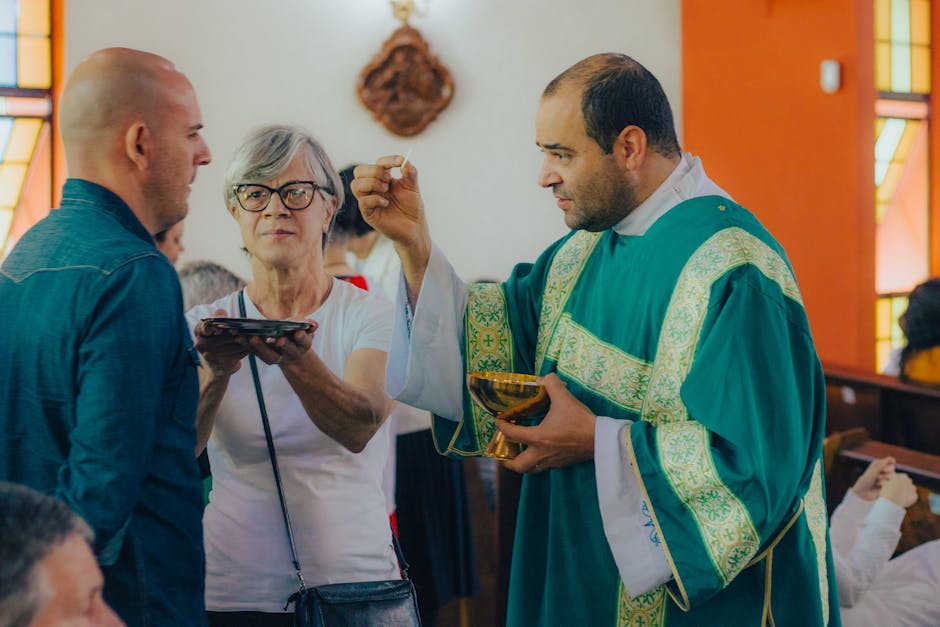
In the Latin (Roman) Catholic Church, the use of unleavened bread in the Eucharist remains the rule. It signifies the purity and simplicity of Christ’s sacrifice, representing the unblemished nature of his offering. The unleavened bread also symbolizes the eternal nature of Christ’s sacrifice, its absence of leaven suggesting an absence of sin and corruption.
Church law states the rule directly: “According to the ancient tradition of the Latin Church, the priest is to use unleavened bread in the eucharistic celebration whenever he offers it” (Code of Canon Law, canon 926), and the bread “must be only wheat and recently made so that there is no danger of spoiling” (canon 924). The General Instruction of the Roman Missal repeats that the bread “must be unleavened” (no. 320). The Eastern Catholic Churches, which are in full communion with Rome, follow their own traditions, and most of them use leavened bread.
The Symbolism of Unleavened Bread in Catholicism
The symbolism of unleavened bread in Catholicism is multifaceted, encompassing concepts of purity, sacrifice, and unity. Its purity represents the purity of Christ’s sacrifice, while its simplicity highlights the humility and selflessness of his act of giving himself for humanity.
Moreover, the unleavened bread serves as a reminder of the unity of the Catholic Church, symbolizing the shared faith and devotion of believers across the globe. This unity extends beyond geographical boundaries, uniting all Catholics through their common belief in the Eucharist and its transformative power.
Common Questions About Unleavened Bread in Catholicism
Why do Catholics use unleavened bread for the Eucharist?
The use of unleavened bread in the Catholic Eucharist stems from its connection to the Jewish Passover and the Last Supper. It symbolizes purity, simplicity, and the eternal nature of Christ’s sacrifice. The absence of leaven signifies the absence of sin and corruption, reminding Catholics of the unblemished nature of Christ’s offering.
What is the theological significance of unleavened bread in the Catholic Eucharist?
The unleavened bread in the Catholic Eucharist is understood to undergo transubstantiation, meaning that the substance of the bread is transformed into the actual Body of Christ, while the appearances of bread remain. This doctrine is rooted in the belief that Christ’s sacrifice is truly present in the Eucharist, allowing believers to experience a profound communion with him.
How does the unleavened bread contribute to the overall understanding of the Eucharist?
The symbolism of the unleavened bread contributes to the overall understanding of the Eucharist by highlighting the purity, simplicity, and eternal nature of Christ’s sacrifice. It reinforces the belief in the Real Presence, reminding Catholics of Christ’s presence in the Eucharist, and serving as a reminder of their unity with him and with fellow believers.
What are some practical considerations for understanding and participating in the Eucharist?
When participating in the Eucharist, it’s important to approach the altar with reverence and a spirit of humility. Reflect on the significance of the unleavened bread as a symbol of Christ’s sacrifice and the communion it represents. Take time to appreciate the solemnity of the moment and strive to receive the Eucharist with a truly devout heart.
Are there any differences in the use of unleavened bread in the Catholic Church today compared to the past?
While the use of unleavened bread in the Catholic Eucharist remains a core practice, there have been some changes over time. Notably, the Second Vatican Council (1962-1965) encouraged a greater emphasis on the active participation of the laity in Mass, leading to the use of vernacular languages and a greater understanding of the significance of the Eucharist within the community.
Conclusion
The use of unleavened bread in the Catholic Eucharist, rooted in the Jewish Passover and the Last Supper, represents a potent symbol of Christ’s sacrifice, purity, and the unity of the Church. As you participate in the Mass, take a moment to reflect on the symbolism of the unleavened bread, its connection to the Jewish roots of Christianity, and its role in celebrating the divine presence of Christ in the Eucharist. You will deepen your understanding of this sacred element and the depth of its meaning in the Catholic faith.
For those interested in exploring this topic further, consider consulting reputable Catholic resources, such as the Catechism of the Catholic Church, or engaging in discussions with your parish priest or other knowledgeable individuals. By delving deeper into the significance of unleavened bread, you can gain a richer appreciation for the beauty and depth of the Catholic faith.