On Sunday, November 22, 2026, Catholic parishes close the liturgical year with the Solemnity of Our Lord Jesus Christ, King of the Universe, better known as Christ the King. The following Sunday, November 29, Advent begins and the cycle starts over. The feast is barely a century old, yet it says something the Church has believed from the start: Jesus is Lord of everything, including the parts of life we tend to keep in separate boxes, like work, money and politics.
Pope Pius XI created the feast in 1925 with the encyclical Quas Primas. In the 1969 reform of the Roman calendar it moved from late October to the last Sunday of the Church year and received its current full title. Its meaning has stayed the same. Christ’s kingship is real, it reaches into public life as well as private devotion, and it looks like service rather than domination.
When is Christ the King Sunday?
Christ the King always falls on the last Sunday in Ordinary Time, the Sunday right before the First Sunday of Advent. Because Advent’s start moves with the calendar, so does this feast.
| Year | Christ the King | First Sunday of Advent |
|---|---|---|
| 2026 | Sunday, November 22 | Sunday, November 29 |
| 2027 | Sunday, November 21 | Sunday, November 28 |
| 2028 | Sunday, November 26 | Sunday, December 3 |
These dates are worked out from the rule that Advent has four Sundays before Christmas. Since it is a Sunday, the usual Sunday Mass obligation applies. The priest wears white, the liturgical color the Church uses for celebrations of the Lord.
Why Pius XI created the feast in 1925
Quas Primas is dated December 11, 1925, near the end of a Holy Year. Pius XI was worried about societies that had pushed God to the margins. In the encyclical he names “the plague of anti-clericalism” (no. 24), describing how “the empire of Christ over all nations was rejected” and religion was placed under the power of the state.
His answer was a feast rather than another document, and he explained why with unusual frankness. Official teaching, he wrote, usually reaches “only a few and the more learned among the faithful; feasts reach them all; the former speak but once, the latter speak every year” (no. 21). A yearly celebration would teach ordinary Catholics in a way an encyclical never could.
Pius set the feast for “the last Sunday of the month of October,” the Sunday just before All Saints (no. 28), and he explained the choice. He wanted a Sunday so that the laity, “free from their daily tasks,” could take part. Late October also came near the end of the liturgical year as it was then arranged, and right before All Saints, so that the Church would first “extol the glory of him who triumphs in all the Saints” (no. 29). He also directed that the dedication of the human race to the Sacred Heart of Jesus be renewed each year on that day.
The 1969 change: a new date and a fuller title
In the reform of the Roman calendar that followed the Second Vatican Council, the feast was raised in name and moved in time. As the National Catholic Register summarizes, in the 1969 reform the Solemnity of Our Lord Jesus Christ, King of the Universe “migrated from the end of October to become the final Sunday of the Church year.”
The move sharpened an idea Pius had already named, that the feast crowns the whole year of Christ’s mysteries. Now placed on the very last Sunday, it looks toward the end of time: the Church finishes its annual retelling of salvation by contemplating Christ who will come again in glory, and then begins Advent, which also looks toward his coming. Communities that use the older form of the Roman Rite still keep the feast on the last Sunday of October.
What kind of king Christ is
It’s easy to hear “king” and picture thrones and armies. The Gospels complicate that picture, and so does the Church. The Catechism teaches that “Christ, King and Lord of the universe, made himself the servant of all,” and that for the Christian, “to reign is to serve him,” particularly when serving “the poor and the suffering” (CCC 786).
Pius XI said the same in his own way. Christ reigns “in the hearts of men,” he wrote, by truth and by a love that draws people to himself (no. 7). Later in the encyclical he spells out what that means for an individual: “He must reign in our minds… He must reign in our wills… He must reign in our hearts” (no. 33). The kingdom isn’t a political program. It is a claim on the whole person.
This year’s Gospel: the sheep and the goats
In 2026 the Sunday readings follow Year A, the year of Matthew. On Christ the King in that year, the Gospel is Matthew 25:31 to 46, where the Son of Man comes in glory and separates the nations like a shepherd separating sheep from goats. The surprise in the story is the standard of judgment. The King identifies himself with the hungry, the thirsty, the stranger, the sick and the imprisoned, and what people did or failed to do for them, they did or failed to do for him.
That passage may be the clearest commentary on the feast. The King is found in the least of his brothers and sisters.
Christ the King at work and in public life
Pius XI insisted that Christ’s rule isn’t limited to church on Sunday. Society will be blessed, he wrote, “when once men recognize, both in private and in public life, that Christ is King” (no. 19). The Catechism echoes that the Church “shows forth the kingship of Christ over all creation and in particular over human societies” (CCC 2105).
For most Catholics, public life means the workplace. Taking Christ’s kingship seriously there doesn’t require preaching to coworkers. It looks more like this:
- treating customers, employees and competitors as people for whom Christ died, not as means to an end
- telling the truth in advertising, estimates and invoices
- paying people fairly and on time, which Catholic teaching treats as a matter of justice
- noticing the employee or neighbor who is struggling, in the spirit of Matthew 25
- letting decisions about growth, debt and hours answer to conscience, not only to the spreadsheet
Our article on business leaders and the teachings of Christ takes up the same theme for owners and managers.
How Catholics keep the feast
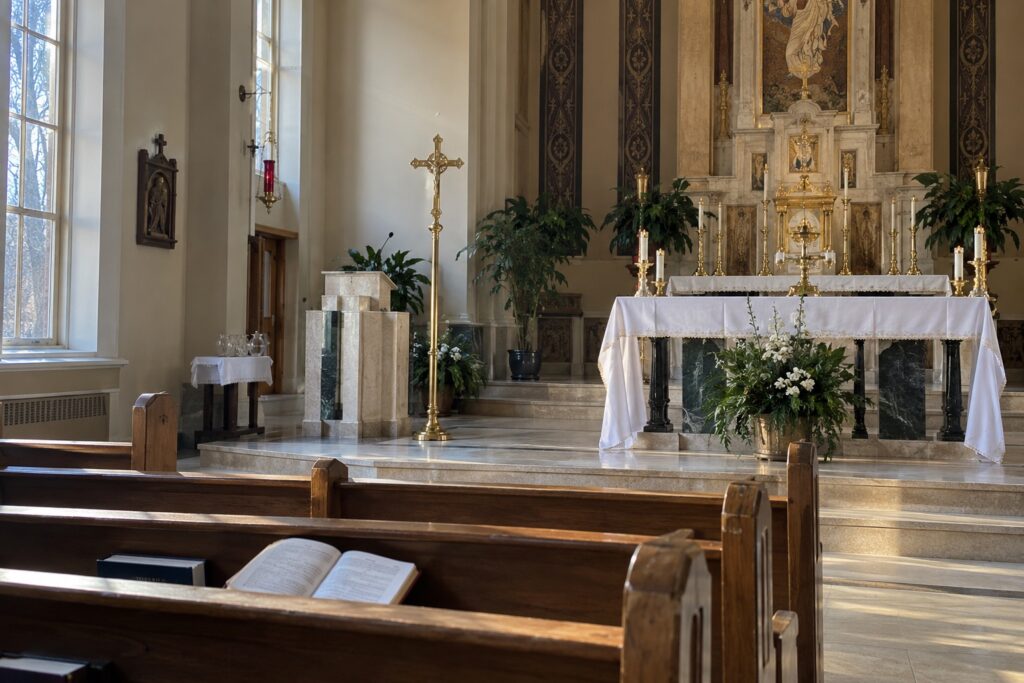
The center of the day is Sunday Mass. Beyond that, customs vary by parish and family. Some parishes add Eucharistic adoration or a procession, and some publicly pray an act of dedication of the human race to Christ the King. In recent years the day has also been the diocesan celebration of World Youth Day. Pope Leo XIV noted in his Angelus of November 23, 2025 that “dioceses around the world are celebrating World Youth Day,” praying that young people would dedicate themselves to Christ’s “Kingdom of love, justice and peace.”
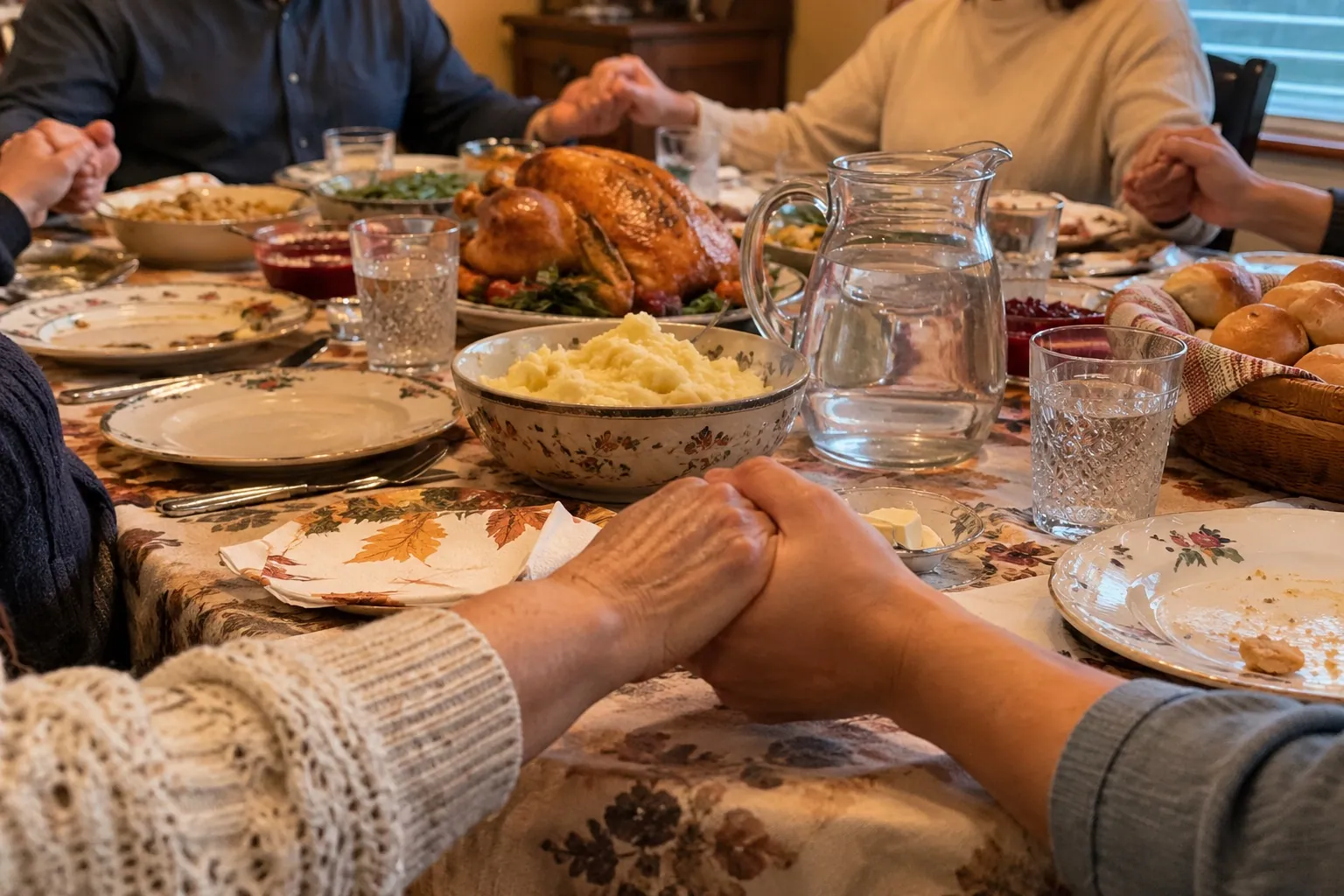
At home, a family might simply read the Sunday Gospel together and talk about who “the least” are in their own neighborhood. Christian art shows Christ both in glory and crowned with thorns, a symbol explained in our guide to 22 Catholic symbols and their meaning. Both images belong to this feast.
Several other Christian communities, including many Anglican churches, also keep the Sunday before Advent as a celebration of Christ’s kingship, a quiet point of common ground.
Frequently asked questions
Is Christ the King a holy day of obligation?
It always falls on a Sunday, so Catholics are already obliged to attend Mass. There is no separate weekday obligation.
Why is it called the “last Sunday” of the year?
The Church’s liturgical year begins with the First Sunday of Advent. Christ the King is the final Sunday of Ordinary Time before Advent, so it closes the year.
Who started the feast of Christ the King?
Pope Pius XI, in the encyclical Quas Primas, dated December 11, 1925.