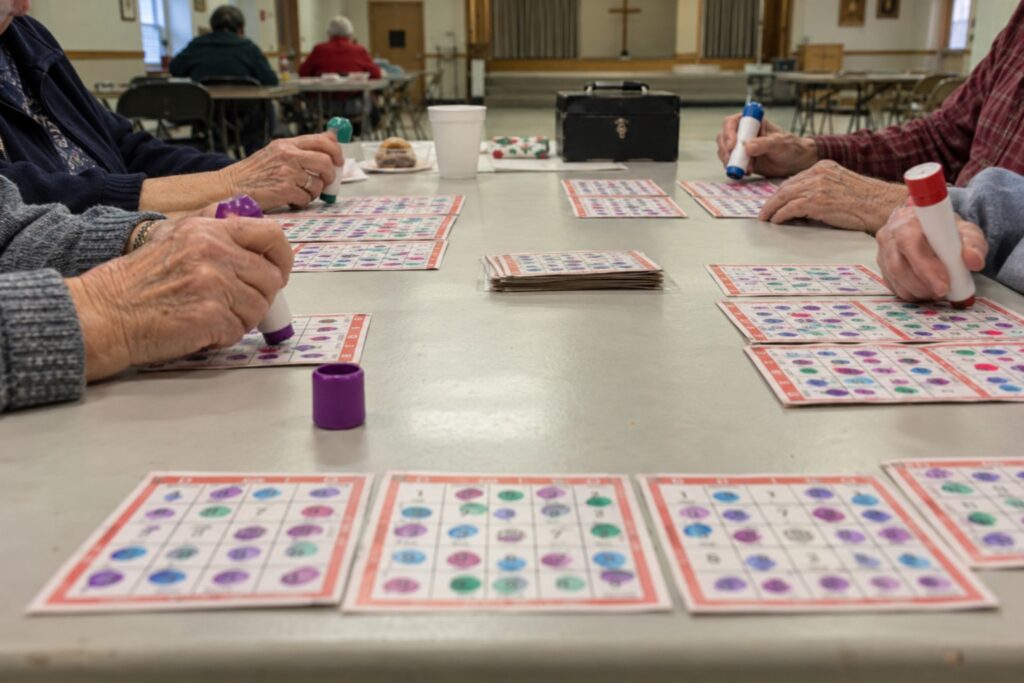
No, gambling is not a sin in itself for Catholics. The Catechism says games of chance and wagers “are not in themselves contrary to justice.” A friendly card game for small stakes, a parish raffle ticket or a night of church bingo can all be morally fine.
Gambling becomes sinful when it takes money you or others need, when it involves cheating, or when it starts to control you. The Church’s teaching is short, and it’s balanced: it doesn’t treat every bet as a vice, and it doesn’t pretend gambling is harmless.
What the Catechism says about gambling
The key passage is a single paragraph in the section on the Seventh Commandment (“You shall not steal”):
“Games of chance (card games, etc.) or wagers are not in themselves contrary to justice. They become morally unacceptable when they deprive someone of what is necessary to provide for his needs and those of others. The passion for gambling risks becoming an enslavement. Unfair wagers and cheating at games constitute grave matter, unless the damage inflicted is so slight that the one who suffers it cannot reasonably consider it significant.” (CCC 2413)
Where the passage sits matters. The Catechism treats gambling mainly as a question of justice, of what we owe to our families and to others, and only secondarily as a question of self-control. The money you spend on a lottery ticket is yours to spend, provided the rent, the grocery bill and your obligations to others come first.
When gambling becomes a sin
Catholic moral theology has worked through this for centuries. The old Catholic Encyclopedia, written in 1909, summarized four conditions theologians commonly required for gaming to be morally acceptable. They still hold up well:
- The money staked has to be yours and free for you to use. Betting a client’s money, or money your spouse and children need, is wrong.
- You have to be playing freely, not under pressure or coercion.
- There can be no fraud. Bluffing in poker is part of the game. Marking cards is not.
- The contest has to be reasonably fair. Experts setting up a game to clean out beginners is a form of taking advantage.
The Catechism adds the danger that sits underneath all of this: “the passion for gambling risks becoming an enslavement” (CCC 2413). That’s the virtue of temperance at work. The Catechism describes temperance as the virtue that “moderates the attraction of pleasures and provides balance in the use of created goods” (CCC 1809). Gambling that started as fun and now feels like a need has moved out of that balance.
A quick self-check
These questions don’t replace a good confessor or a counselor, but they can help you see where you stand:
| Question | Generally fine | A warning sign |
|---|---|---|
| Whose money is it? | Spare money set aside for entertainment | Rent, bills, savings, or money owed to others |
| How much? | An amount you’d spend on a dinner out or a ballgame | More than you planned, or more each time |
| Why are you playing? | Fun, friends, supporting a good cause | Chasing losses, escaping stress, needing the rush |
| Who knows about it? | Your spouse or family know and don’t mind | You hide it or lie about it |
| Is it fair? | Honest game, honest players | Cheating, rigged odds, taking advantage of someone |
If your answers drift into the right-hand column, take that seriously. It may be a moral problem, a health problem, or both.
What about parish bingo, raffles and casino nights?
Catholic parishes have a long tradition of bingo nights, festival raffles and similar fundraisers, and Church teaching allows them. Writing about lotteries, the Catholic Encyclopedia says that if there’s no fraud and some proportion between the price of a ticket and the value of the chance to win, a lottery “cannot be condemned as in itself immoral.” It also warns that lotteries become objectionable “if carried to excess.”
That’s a fair standard for a parish, too. A good fundraiser follows state and local law, is run honestly, is transparent about where the money goes, keeps stakes modest, and watches out for regulars who seem to be in over their heads. For many people, a raffle ticket at a parish festival is mostly a gift to the parish, with the chance to win as part of the fun.
Business owners who sponsor or host charitable gaming events can apply the same test: honest games, modest stakes, and real care for the people playing. Our pieces on ways businesses can support the Catholic community and Catholic business principles cover the bigger picture.
Sports betting, apps and online casinos
The Church’s teaching doesn’t change with the technology, but the risks do. Betting apps are available every hour of the day, losses can be refilled with a few taps, and a bet can feel less like spending money than handing over cash at a counter. The same questions apply: whose money is it, is it fair, and is it still a choice?
Some practical habits help:
- Set a fixed entertainment budget and stop when it’s gone.
- Don’t chase losses.
- Turn off notifications and promotions from betting apps.
- Talk openly with your spouse about how much you spend.
- If you can’t stick to your own limits, treat that as a sign to get help.
When gambling has become a problem
Gambling addiction is real, and there’s no shame in asking for help. One of the Church’s own saints knew it firsthand. St. Camillus de Lellis, according to Franciscan Media, “grew up with an excessive love for gambling,” and in 1574, at 24, “gambled away everything he had,” down to his shirt. After his conversion he spent the rest of his life caring for the sick, and he’s now a patron of nurses and hospitals (see our guide to patron saints of professions). Grace works on real people with real struggles.
If you or someone you love is struggling, start here:
- Contact the National Problem Gambling Helpline at 1-800-MY-RESET (1-800-697-3738) by call or text, or use the online chat at ncpgambling.org. It’s confidential, free, and available 24/7, and it connects you with resources in your state.
- Go to confession. The sacrament isn’t only for forgiveness of what’s past. It’s also a source of grace for the fight ahead. Our article on the Act of Contrition can help you prepare.
- Tell someone you trust, and let them help with practical steps like handing over control of the finances for a while.
- Look into counseling and peer support groups. The NCPG site lists treatment options and peer support resources.
If someone is in immediate danger, call 911 or 988, as NCPG advises. Its helpline is not a crisis line.
Frequently asked questions
Is playing the lottery a sin for Catholics?
Not in itself. Buying a lottery ticket with money you can spare isn’t sinful. It becomes wrong when it takes money needed for your family or others, or when it becomes a compulsion.
Is betting on sports a sin?
Not automatically. The same principles apply: your own spare money, fair odds, no cheating, and no loss of self-control.
Can a Catholic work in a casino?
Nothing in Church teaching forbids it, since games of chance aren’t wrong in themselves. Working honestly in a lawful business that offers games of chance isn’t sinful in itself, though anyone in the industry should care about customers who show signs of addiction. If you have specific concerns about your job, talk with a priest.
Should I confess gambling?
Confess it if you gambled away money your family needed, cheated, lied about it, or feel it controlling you. Casual, moderate play isn’t a sin to confess.
Sources and further reading
- Catechism of the Catholic Church, no. 2413
- Catechism of the Catholic Church, no. 1809 (temperance)
- Catholic Encyclopedia (1909): Gambling
- Catholic Encyclopedia (1910): Lottery
- Franciscan Media: Saint Camillus de Lellis
- National Council on Problem Gambling: Help and Treatment
If a question about gambling is weighing on your conscience, bring it to a priest you trust. That conversation is usually easier than people expect.