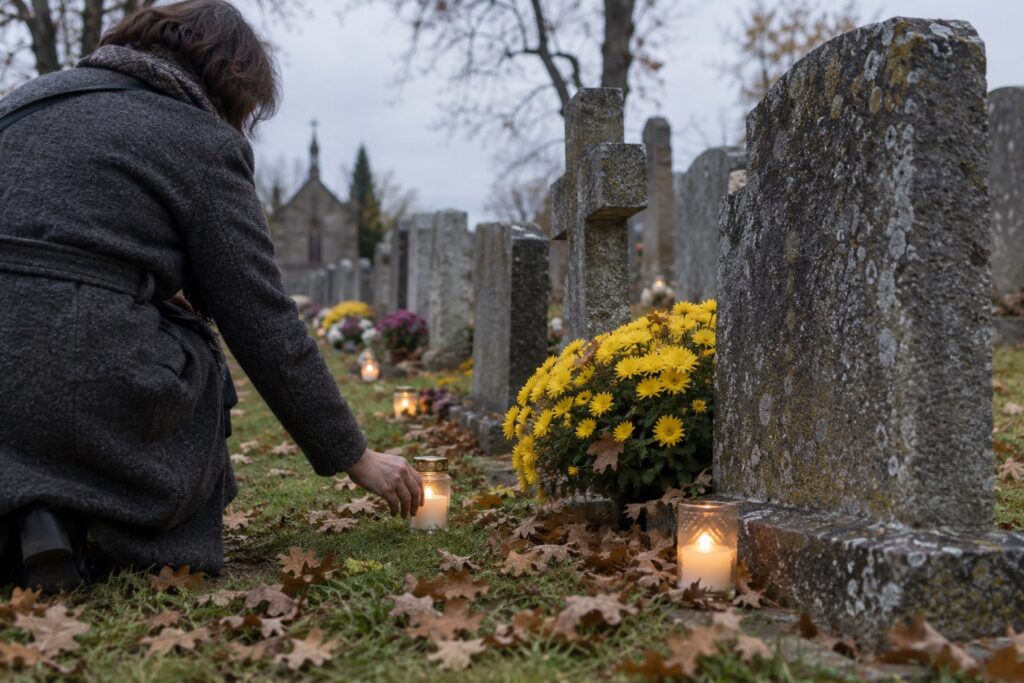
On Sunday, November 1, 2026, Catholics celebrate the Solemnity of All Saints. The next day, Monday, November 2, is All Souls Day, the Commemoration of All the Faithful Departed. One feast rejoices with everyone already in heaven; the other prays for everyone who has died and may still be on the way there.
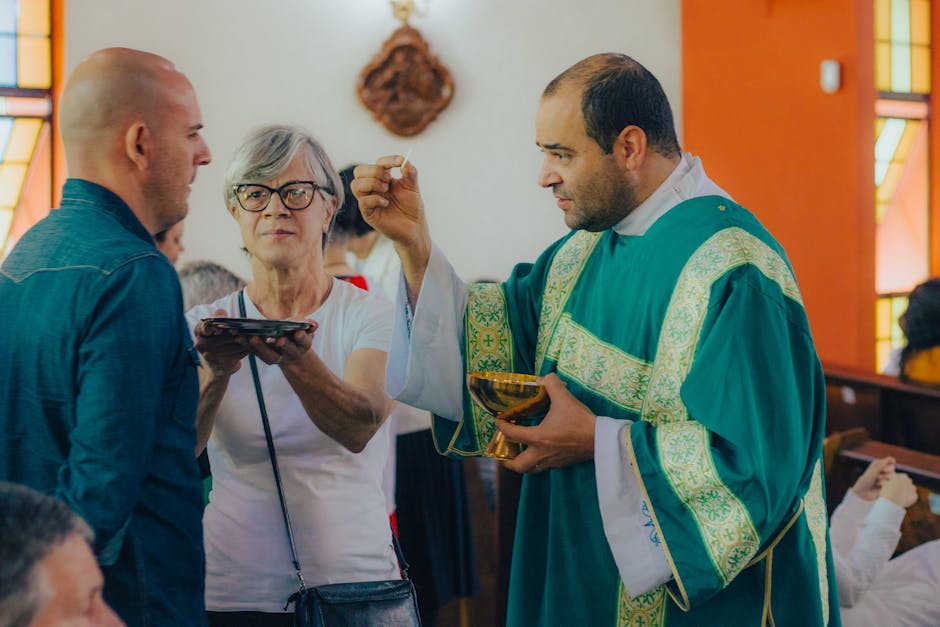
Because All Saints Day lands on a Sunday this year, it replaces the Thirty-First Sunday in Ordinary Time, and your regular Sunday Mass is the All Saints Mass. Saturday evening Masses on October 31 that anticipate Sunday will also use the prayers of All Saints, according to the U.S. bishops’ Divine Worship newsletter.
All Saints Day and All Souls Day in 2026 at a glance
| Date | Day | What it is | Mass obligation |
|---|---|---|---|
| Sat., Oct. 31 | All Hallows’ Eve | Evening Masses anticipating Sunday are of All Saints | An anticipated Mass satisfies the Sunday obligation |
| Sun., Nov. 1 | Solemnity of All Saints | Replaces the Thirty-First Sunday in Ordinary Time | Yes (it is a Sunday) |
| Mon., Nov. 2 | All Souls Day | Masses and prayers for all the faithful departed | No |
| Nov. 1 to 8 | Octave of prayer for the dead | Daily plenary indulgence for visiting a cemetery and praying for the dead | Not applicable |
In the United States, November 1 is a holy day of obligation, but the bishops’ complementary norm lifts the obligation when it falls on a Saturday or a Monday. That exception doesn’t apply in 2026, and since the day is a Sunday anyway, one Mass covers everything. All Souls Day is never a holy day of obligation, though many parishes schedule extra Masses for it.
What All Saints Day celebrates
All Saints is a feast of the whole Church in heaven, not a list of famous names. The canonized saints are included, but so is every person, known or unknown, who has reached the joy of God. Many of them were ordinary people: parents, grandparents, workers and neighbors whose holiness nobody wrote down.
The Catechism ties the feast to a line Catholics say every Sunday in the Creed: “the communion of saints.” It explains that the Church exists in three states at once. Some of Christ’s disciples are “pilgrims on earth,” others “have died and are being purified,” and others “are in glory” (CCC 954). All three share one life in Christ, and the bond between them isn’t broken by death.
That is why Catholics ask the saints to pray for them. The Catechism says those in heaven “do not cease to intercede with the Father for us” through “the one mediator between God and men, Christ Jesus” (CCC 956). The saints don’t replace Christ. They are friends who pray alongside us.
The readings for the day fit the theme. The first reading, from Revelation 7, describes a great multitude from every nation standing before the throne of the Lamb. The Gospel is the Beatitudes from Matthew 5, which reads almost like a portrait of what a saint looks like up close: poor in spirit, merciful, clean of heart, hungry for righteousness.
How the feast began
Early Christians kept the anniversary of each martyr’s death, usually at the place where the martyr died. During the persecution of Diocletian the number of martyrs grew so large that a separate day for each became impossible, and local churches began keeping a common feast, according to the Catholic Encyclopedia.
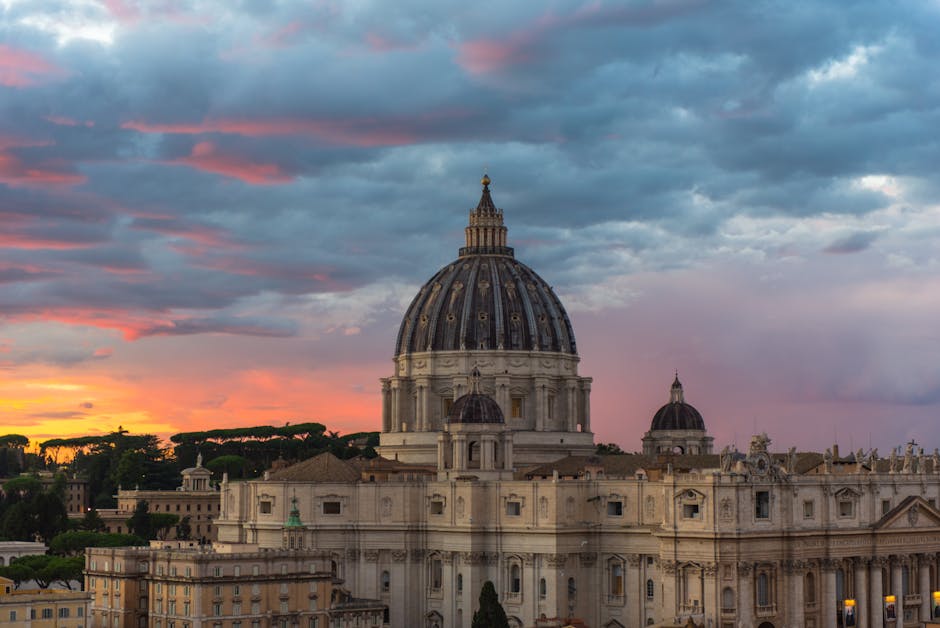
In Rome, Pope Boniface IV dedicated the Pantheon to the Blessed Virgin and all the martyrs in 609 or 610. Pope Gregory III (731 to 741) later consecrated a chapel in St. Peter’s Basilica to all the saints and fixed its anniversary on November 1. Gregory IV (827 to 844) extended the November 1 celebration to the entire Church.
The evening before the feast, All Hallows’ Eve, is where the name “Halloween” comes from. If you run a business or plan events around October 31, our piece on preparing for Halloween in a Catholic sense covers that side of the season.
All Souls Day and praying for the dead
All Souls Day rests on a teaching many Catholics find consoling once it’s explained well. The Catechism says that people who die in God’s grace and friendship “but still imperfectly purified” are “assured of their eternal salvation,” yet undergo a purification after death “so as to achieve the holiness necessary to enter the joy of heaven” (CCC 1030). The Church calls this purification Purgatory, and stresses that it is “entirely different from the punishment of the damned” (CCC 1031).
Praying for the dead is older than the word Purgatory. The Catechism points to 2 Maccabees 12:46, where Judas Maccabeus “made atonement for the dead,” and notes that from the beginning the Church has offered prayers for them, “above all the Eucharistic sacrifice.” It also commends almsgiving, indulgences and works of penance on their behalf (CCC 1032).
A yearly day for all the faithful departed spread through the monasteries of Cluny under St. Odilo, who died in 1048, and from there across the Western Church. A more recent custom shows how seriously the Church takes this day: in 1915, during the First World War, Pope Benedict XV’s apostolic constitution Incruentum Altaris allowed priests to celebrate three Masses on All Souls Day. In 2020 the Apostolic Penitentiary again invited all priests to do so.
The November indulgence for the faithful departed
An indulgence, in the Catechism’s words, is “a remission before God of the temporal punishment due to sins whose guilt has already been forgiven,” and it “may be applied to the living or the dead” (CCC 1471). In early November the Church offers two plenary indulgences that can be applied only to the souls in Purgatory. The Apostolic Penitentiary describes them, citing the Manual of Indulgences:
- Visit a cemetery and pray for the dead, even if only mentally. This is normally granted for each individual day from November 1 to 8.
- On All Souls Day, visit a church or oratory and pray the Our Father and the Creed there. This can also be done on the preceding or following Sunday or on the Solemnity of All Saints.
- Meet the usual conditions: sacramental confession, Eucharistic communion and prayer for the Holy Father’s intentions, along with complete detachment from sin.
In 2020 and 2021, because of the pandemic, the Penitentiary extended these indulgences through all of November. Those were special decrees, so for 2026 plan on the normal November 1 to 8 window unless your diocese announces otherwise. If confession has been a while, a quick look at the Act of Contrition before you go can help.
Ways to keep both days at home and in your parish
Neither day needs to be complicated. A few habits carry most of the meaning:
- Go to Mass on Sunday, November 1 (or Saturday evening), and if your schedule allows, again on Monday for All Souls.
- Visit the graves of family members during the first week of November. Pull weeds, wipe the headstone, leave flowers or a candle, and pray by name for the people buried there.
- Ask your parish whether it keeps a book of remembrance in November, where families write the names of loved ones who have died.
- Arrange for a Mass to be offered for someone who has died. Call the parish office and ask about having a Mass intention scheduled.
- Pick one saint to learn about as a family on November 1. Children often connect with saints who did their own ordinary work well. Our guide to Catholic symbols explains many of the images you’ll see in saint art, from palm branches to keys.
Families with Mexican roots may also keep the Día de los Muertos traditions on these days, with home altars and photos of the dead. Those customs are cultural rather than part of the liturgy, and at their best they go hand in hand with praying for the dead.
Frequently asked questions
Is All Saints Day a holy day of obligation in 2026?
Yes. All Saints is a holy day of obligation in the United States, and in 2026 it also falls on a Sunday, so attending Sunday Mass (or a Saturday evening Mass that anticipates it) fulfills the obligation.
Is All Souls Day a holy day of obligation?
No. All Souls Day is not a holy day of obligation, but it is one of the most fitting days of the year to attend Mass for those who have died.
What is the difference between All Saints Day and All Souls Day?
All Saints honors everyone already in heaven and asks for their prayers. All Souls prays for everyone who has died, especially those still being purified.
Can I pray for a relative who wasn’t Catholic?
Yes. Catholics pray for all the dead, and a Mass can be offered for anyone who has died. Ask your parish about scheduling one.
Sources and further reading
- USCCB Committee on Divine Worship Newsletter, February 2026
- USCCB: Canon 1246, holy days of obligation in the United States
- Catechism of the Catholic Church, nos. 946 to 959 (the communion of saints)
- Catechism of the Catholic Church, nos. 1030 to 1032 (Purgatory)
- Apostolic Penitentiary decree on indulgences for the faithful departed (2020)
- Catholic Encyclopedia (1907): All Saints’ Day
Plan now: check your parish’s Saturday evening and Sunday Mass times for All Saints, and put a cemetery visit on your calendar for the first week of November.