Yes, Catholics can be cremated. The Church has permitted cremation since 1963, and a Catholic who chooses it can still have a full funeral Mass. What the Church asks is that cremation not be chosen as a rejection of faith in the resurrection, and that the ashes be treated with the same respect as a body: buried or placed in a cemetery, mausoleum or columbarium, not scattered, divided or kept on a shelf at home.
The Church still prefers burial of the body, and it prefers that the body be present for the funeral when possible. Those preferences come with reasons, and knowing them makes the practical choices easier when a family has to decide quickly.
What the Church actually teaches about cremation
The short version is in the Catechism: “The Church permits cremation, provided that it does not demonstrate a denial of faith in the resurrection of the body” (CCC 2301). Canon law says the same thing in more detail. The Church “earnestly recommends that the pious custom of burying the bodies of the deceased be observed,” but “does not prohibit cremation unless it was chosen for reasons contrary to Christian doctrine” (canon 1176 §3).
The Vatican’s 2016 instruction Ad resurgendum cum Christo (“To rise with Christ”) explains why cremation isn’t a doctrinal problem in itself: it “does not affect his or her soul, nor does it prevent God, in his omnipotence, from raising up the deceased body to new life.” In other words, God doesn’t need an intact body to raise the dead.
Why the Church still prefers burial
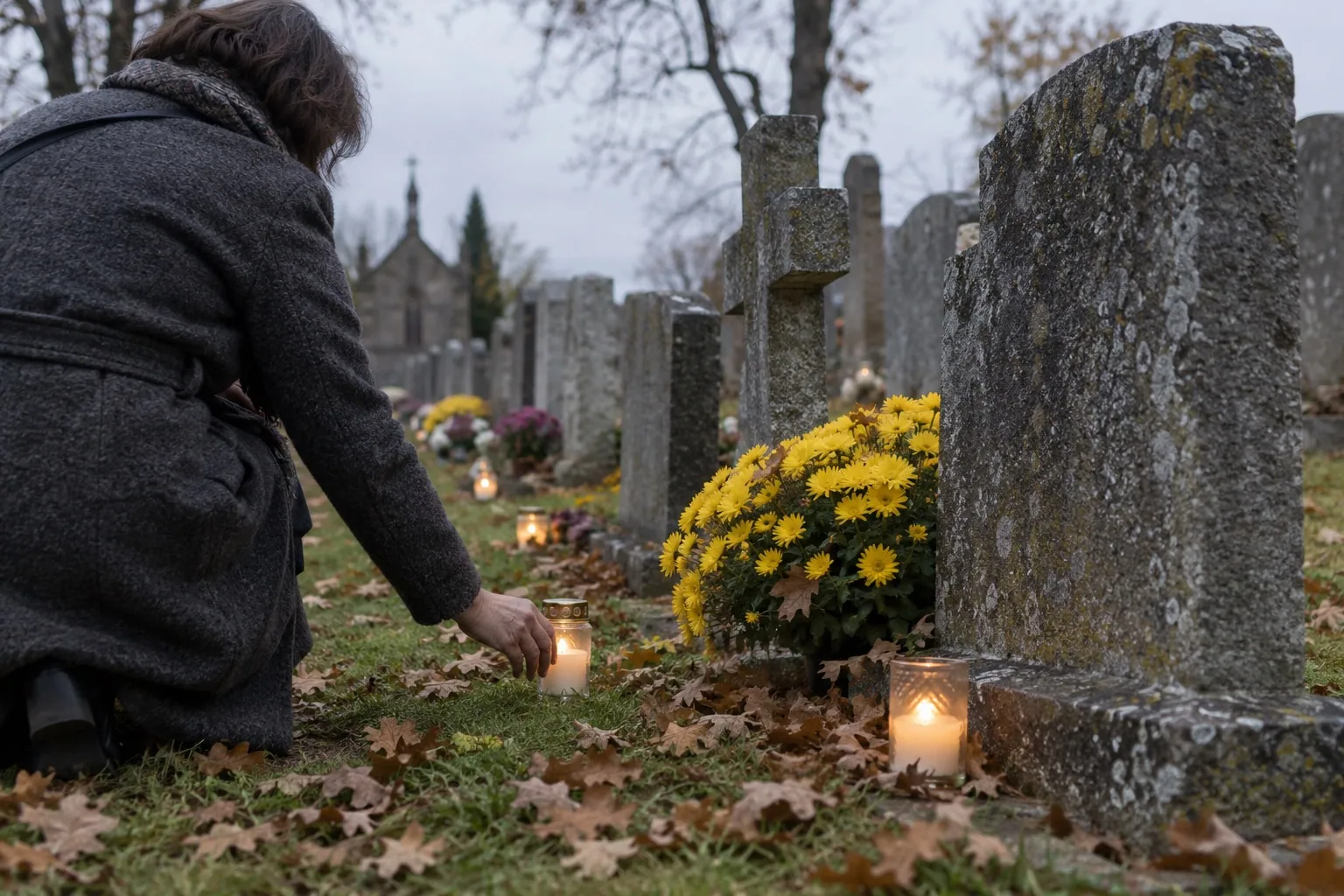
If cremation doesn’t threaten the resurrection, why prefer burial at all? The 2016 instruction gives several reasons. Burial echoes Christ’s own death, burial and resurrection, and it “is above all the most fitting way to express faith and hope in the resurrection of the body.” The body was a temple of the Holy Spirit through baptism, so it deserves honor. Burying the dead is one of the corporal works of mercy. And a grave in a cemetery gives family and parish a place to pray and remember, which is what Catholics do when they visit graves around All Souls Day.
The funeral ritual used in the United States puts it plainly. The Order of Christian Funerals says cremation “does not enjoy the same value as burial of the body,” and that “the Church clearly prefers and urges that the body of the deceased be present for the funeral rites” (no. 413). The same document also tells priests and deacons to show “pastoral sensitivity” when circumstances make cremation the only feasible choice (no. 415).
How cremation was allowed: 1963 to today
For most of Christian history, burial was simply what Christians did. In 1963 the Holy Office (now the Dicastery for the Doctrine of the Faith) issued the instruction Piam et Constantem, which still urged burial but said cremation is not “opposed per se to the Christian religion.” From then on, the sacraments and funeral rites were no longer to be denied to people who asked for cremation, provided the choice wasn’t made through “a denial of Christian dogmas, the animosity of a secret society, or hatred of the Catholic religion and the Church.” That change was later written into the 1983 Code of Canon Law.
In 2016, with cremation far more common, the Congregation for the Doctrine of the Faith issued Ad resurgendum cum Christo, approved by Pope Francis, to set out clear rules for the ashes. In December 2023, the Dicastery answered two questions from Cardinal Matteo Zuppi of Bologna, which refined those rules slightly.
What to do with the ashes
This is where most families have questions. The rules from the 2016 instruction, the 2023 response and the U.S. funeral ritual line up like this:
| Practice | Allowed? | Source |
|---|---|---|
| Burial in a grave or placement in a mausoleum or columbarium | Yes | Ad resurgendum cum Christo 5; Order of Christian Funerals 417 |
| A common, permanent sacred place for ashes, with each person’s name recorded | Yes | Dicastery for the Doctrine of the Faith, 2023 |
| Keeping a small portion in a place meaningful to the person’s life | Possible, only with permission from Church authority; the rest goes to a sacred place | Dicastery for the Doctrine of the Faith, 2023 |
| Keeping the urn at home | No, except in grave and exceptional cases approved by the bishop | Ad resurgendum cum Christo 6 |
| Dividing ashes among family members | No | Ad resurgendum cum Christo 6 |
| Scattering on land, at sea or from the air | No | Ad resurgendum cum Christo 7 |
| Jewelry, mementos or keepsake objects containing ashes | No | Ad resurgendum cum Christo 7 |
The reasoning is pastoral as much as doctrinal. The 2016 instruction says keeping ashes in a sacred place “ensures that they are not excluded from the prayers and remembrance of their family or the Christian community,” and protects remains from being forgotten “once the immediately subsequent generation has too passed away.” Anyone who has helped clear out a relative’s house knows how easily an urn on a closet shelf ends up with no one sure what to do with it.
The 2023 change is narrow. It doesn’t permit scattering or keepsake jewelry. It says Church authority, following civil law, “may consider and evaluate a request by a family” to keep “a minimal part of the ashes” in a place significant to the person’s life, provided any “pantheistic, naturalistic, or nihilistic misunderstanding is ruled out” and the remaining ashes are kept in a sacred place. A family that wants to do this should talk with their pastor first, not after.
Cremation and the funeral Mass
The U.S. bishops recommend that, when cremation is chosen, it take place after the funeral. That way the family can have the vigil (wake) and the funeral Mass with the body present, then cremation, then the committal at the cemetery (Order of Christian Funerals 418). If cost is a concern, ask the funeral home whether a rental casket is available for the services.
When cremation has already happened, a funeral Mass with the ashes present is permitted in U.S. dioceses under an indult from the Holy See, provided the cremation wasn’t chosen for reasons contrary to Christian teaching and the diocesan bishop judges it pastorally appropriate (no. 426). In that case the urn is placed on a small table or stand where the casket would normally go, and prayers that refer to the body are swapped for suitable alternatives.
One hard case deserves a straight answer. Canon law says that people who chose cremation “for reasons contrary to Christian faith” are to be denied a Church funeral unless they showed some sign of repentance before death (canon 1184). The 2016 instruction applies the same rule when someone notoriously asked for cremation and scattering for those reasons. This is about an explicit rejection of the faith, not about a grieving family making a practical decision, and when there’s doubt the bishop decides.
Practical steps for families
- Before making arrangements, call the parish. The priest can tell you how your diocese handles funerals with cremated remains and help you schedule the Mass.
- If you have time to choose, consider the order the Church recommends: vigil and funeral Mass with the body, then cremation, then committal.
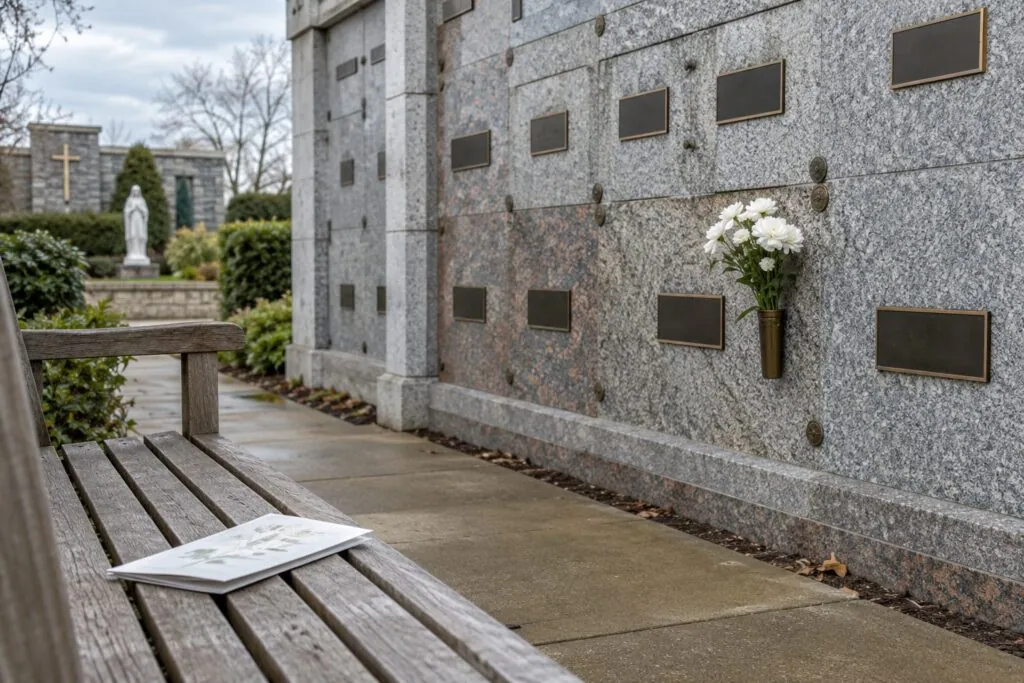
- Choose a worthy urn and plan where it will be buried or placed. Ask a Catholic cemetery about columbarium niches or plots for urns.
- Record the person’s name on a plaque or stone, as the funeral ritual suggests.
- If ashes from an earlier death are still at home, it isn’t too late. Ask your parish or a Catholic cemetery about a committal service and a final resting place.
A funeral director who knows Catholic practice can make all of this easier. You can search our directory for Catholic-owned and Catholic-friendly funeral homes, or browse listings by state.
Frequently asked questions
Is cremation a sin for Catholics?
No. Choosing cremation is not a sin when it isn’t done to deny the resurrection. The Church prefers burial but permits cremation.
Can I keep my mother’s ashes at home?
Generally, no. The 2016 instruction says ashes are not to be kept in a home except in grave and exceptional cases approved by the bishop. They belong in a cemetery, mausoleum or columbarium.
Can ashes be scattered if that was the person’s wish?
No. The Church doesn’t allow scattering, even when the deceased asked for it. Talk with your pastor about honoring the person’s wishes in a way that keeps the remains in a sacred place.
Do Catholics have to be buried in a Catholic cemetery?
No. Canon law lets everyone choose the cemetery of burial unless prohibited by law (canon 1180). Many families still prefer a Catholic cemetery because it is set aside for Christian burial and prayer.
Sources and further reading
- Congregation for the Doctrine of the Faith, Ad resurgendum cum Christo (2016)
- Dicastery for the Doctrine of the Faith, response on the conservation of ashes (2023)
- Code of Canon Law, canons 1176 to 1185
- Order of Christian Funerals, Appendix on Cremation (text via EWTN)
- USCCB: Cremation and the Order of Christian Funerals
If you’re planning ahead, write down your wishes, including where you want to be buried, and give a copy to the person who will handle your funeral.