The Phoenix
A bird of pagan myth said to rise again from its own death, adopted by early Christians as a sign of the resurrection.
What the Phoenix means
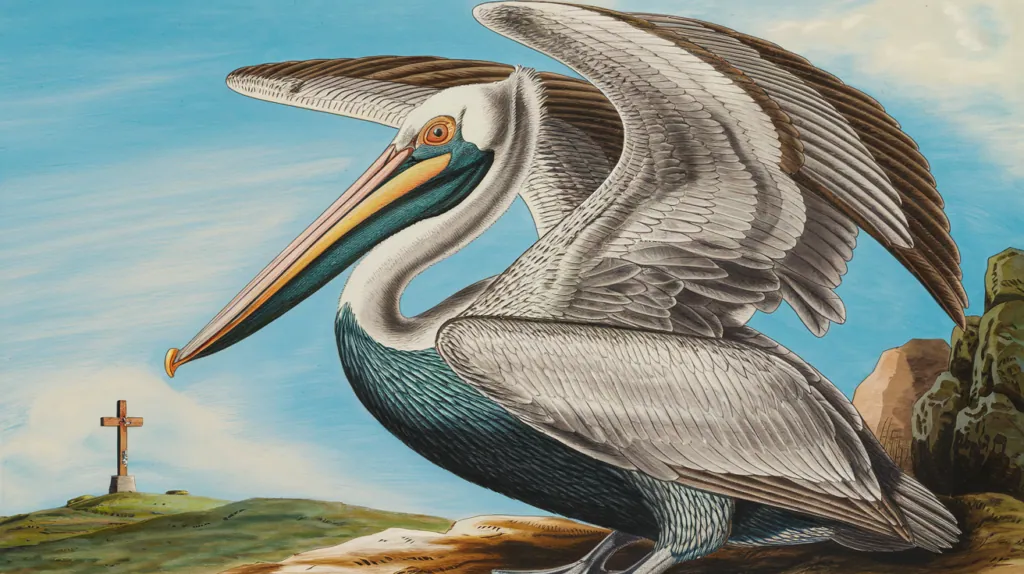
Myth, not natural history: the phoenix is a legendary bird of pagan myth, said to live for centuries, die, and come back to life. Early Christian writers borrowed the story as an image of the resurrection of the body and of Christ's rising from the dead.
The earliest Christian use is in St. Clement of Rome's letter to the Corinthians, written late in the first century. Clement describes a bird from Arabia that lives five hundred years, dies in a nest of spices, and is renewed from its own remains, then carries its parent's bones to Heliopolis in Egypt. If God shows such power even through a bird, Clement argues, it is no wonder that he will raise those who have served him faithfully. Tertullian later used the phoenix the same way, writing that its dying day is also its birthday.
The Physiologus, an early Christian book of animal allegories, told the story with the bird rising on the third day, which made it a figure of Christ, and the image passed into medieval art and bestiaries. In early Christian art the phoenix is sometimes shown perched on a palm tree.