The Dove
The traditional sign of the Holy Spirit, who came down on Jesus in the form of a dove at his baptism.
What the Dove means
Christian art traditionally uses a dove to suggest the Holy Spirit (CCC 701). The image comes from the Gospels: when Christ came up from the water of his baptism, the Holy Spirit came down upon him in the form of a dove. You see it in church domes and ceilings, in baptisteries, and in scenes of the Baptism of the Lord and Pentecost.
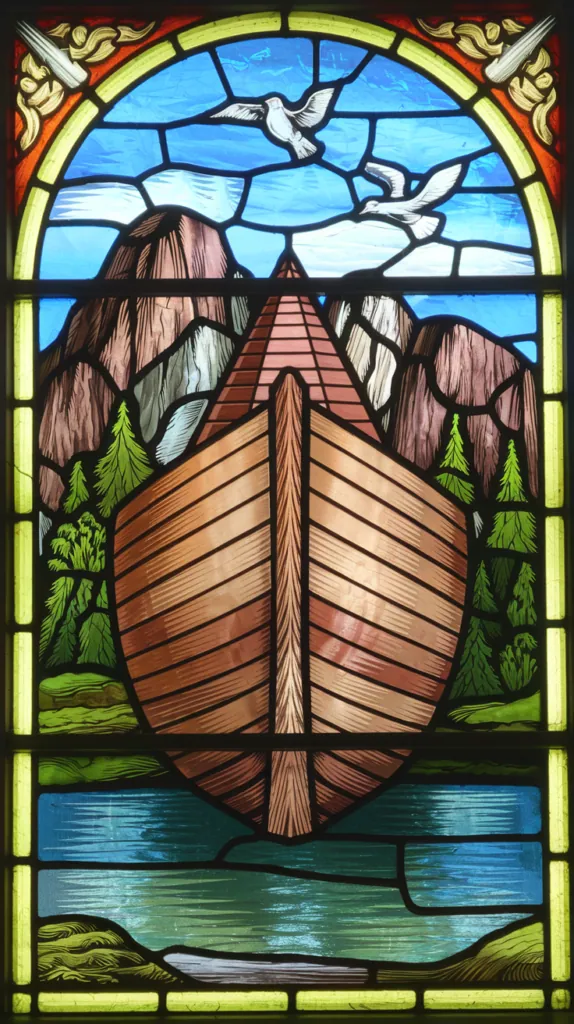
The Catechism links the dove to an older story too. At the end of the flood, a dove released by Noah returned with a fresh olive branch as a sign that the earth could again be lived on (CCC 701). With an olive branch the dove became a sign of peace, and on early Christian tombs it stood for the peaceful rest of the soul and the hope of the resurrection.
HistoryLate in the second century Clement of Alexandria recommended a dove or a fish as a design for a Christian's seal ring. From early medieval times many churches kept the Eucharist for the sick in a dove-shaped vessel hung above the altar, a custom the Catechism still mentions. In art, seven flames or tongues of fire around the dove can stand for the seven gifts of the Spirit.