When the Shepherd Tends a Scattered Flock
In times of social uncertainty and fear, the Church is called not to rigid pronouncements but to the tender, discerning care of a shepherd who knows his sheep. This is the story of how one diocese, faced with a community paralyzed by the threat of family separation, chose to lead with mercy, reminding us that the law of God is always a law of love.
Do not neglect to show hospitality to strangers, for thereby some have entertained angels unawares. (Heb 13:2)
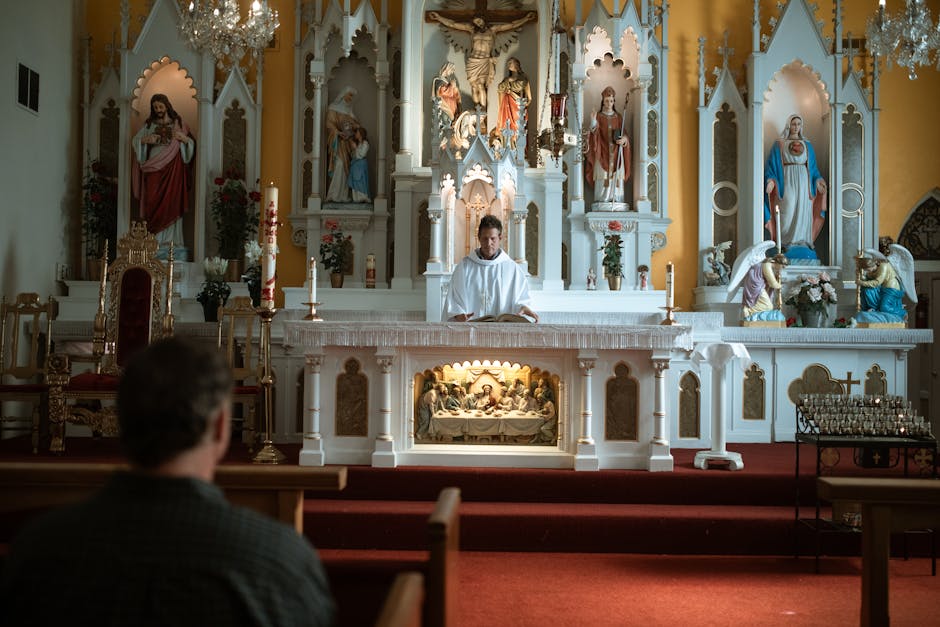
When federal immigration enforcement activity intensifies within a community, a profound and chilling fear can settle upon families. For many of our brothers and sisters, particularly those in households of mixed documentation status, the simple act of leaving home for work, school, or worship becomes fraught with risk. In one American diocese, this reality became so acute that pastors reported a dramatic decline in attendance at Mass and other parish gatherings. Traditional Christmas season celebrations, normally overflowing with life, saw their numbers diminish as families felt forced to remain in the perceived safety of their homes. Trucks associated with enforcement agencies were seen near parishes and schools, creating an atmosphere not of peace, but of anxiety.
Faced with this growing crisis of fear, the local bishop entered into prayerful dialogue with his priests. The question was not whether the Sunday obligation is important—it is the source and summit of our life—but how to ensure the flock could access the spiritual food of the Eucharist without risking the destruction of their families. The answer came in the form of a profound pastoral provision: a temporary dispensation from the obligation to attend Sunday Mass for those who legitimately feared that doing so could lead to detention or deportation.
A Mercy that Makes Worship Possible
This decision was not a concession that the Mass is optional. On the contrary, it was a recognition that for grace to be received, the recipient must be free from overwhelming duress. It was an affirmation that God desires our worship to be an act of love, not an act of terror. The Church, in her wisdom, understands that the family is the domestic church, and its integrity is sacred. When a parent fears being separated from their children simply by driving to their parish, the Church as a loving mother steps in to say: “Be at peace. God’s mercy meets you where you are.”
This pastoral prudence was visible in the life of the parishes. A vibrant outdoor procession, a beloved tradition for generations, was moved into the church’s hallways to shelter its participants. The rite was preserved, but adapted to protect the people. This act demonstrates a living faith, one that creatively and courageously finds ways to bring Christ to the people, even when the doors to the public square seem to be closing. It is a reminder that the Church is not merely a building, but a community of believers whose well-being—spiritual and physical—is the highest law.
The Lord protects the sojourners; he upholds the widow and the fatherless. (Ps 146:9)
From Prudence in the Parish to Action in the World
The challenge presented by such a situation extends beyond the sanctuary doors. It asks every Catholic to consider how we are called to be instruments of God’s mercy and advocates for justice in our own spheres of influence. How do we build a society where no one has to choose between worshiping God and keeping their family together? This question is not just for bishops and priests, but for parishioners, parents, employers, and citizens. It calls us to cultivate virtues of hospitality, prudence, and courageous compassion in every aspect of our lives.
We are a Church of many peoples, a tapestry woven from the threads of countless homelands. Many who come to our nation seeking refuge and opportunity bring with them a deep and resilient faith, sometimes forged in persecution. When they arrive in our communities, they enrich our parishes and renew our zeal. Our duty is to see in them not a problem to be solved, but the face of Christ to be welcomed. This begins with listening to their stories, understanding their fears, and walking with them as they navigate a complex and often unforgiving system.
A Workshop for Building the Common Good
In our parishes, workplaces, and town halls, we have the opportunity to build a culture of encounter and solidarity. This work requires practical tools, grounded in the principles of our Catholic faith. The following table offers a framework for putting these principles into practice.
| Practice | Where to Apply | Why It Serves the Common Good | First Small Step |
|---|---|---|---|
| Pastoral Listening | Parish councils, school meetings, workplace teams | Ensures decisions are based on the real needs and fears of the community, not assumptions. | Invite someone from a different cultural background in your parish to share their perspective. |
| Prudent Adaptation | Event planning, ministry scheduling, community outreach | Protects vulnerable members of the community while ensuring the continuity of faith and fellowship. | Review an upcoming parish event’s schedule and location to ensure it feels safe and accessible for all. |
| Merciful Accompaniment | Family life, neighborhood interactions, civic engagement | Builds bridges of trust and demonstrates that the Church is a safe harbor for those in distress. | Learn about organizations in your area that provide legal or material support to immigrant families. |
| Courageous Dialogue | Civic meetings, conversations with elected officials, business associations | Brings the light of the Gospel and Catholic social teaching to bear on complex public policies. | Read the Church’s teaching on migration and discuss one key point with a friend or family member. |
| Witness to Dignity | Hiring practices, customer service, daily conversations | Upholds the truth that every person is created in God’s image, regardless of legal status. | Make a conscious effort to learn the name of and greet a service worker you see regularly. |
Blessed are the merciful, for they will be shown mercy. (Mt 5:7)
Putting our faith into action begins with small, concrete steps. Here is a simple checklist for cultivating a spirit of welcome and justice in your own life:
- Organize or attend a listening session in your parish to better understand the experiences of immigrant members of your community.
- Educate yourself on the key tenets of Catholic social teaching regarding migration and the dignity of the human person.
- As a business owner or manager, review your workplace policies to ensure they are just, compassionate, and supportive of all employees, especially those facing instability.
- Identify and support local Catholic Charities or other organizations that provide direct assistance to immigrant families.
- Commit to praying regularly for families living in fear of separation and for policymakers who are working on immigration issues.
The Church’s mission of salvation is inseparable from her commitment to the dignity of every human person. In moments of social tension, our call is not to retreat but to step forward with faith, equipped with the virtues of prudence and mercy. By accompanying the fearful, welcoming the stranger, and speaking truth with love, we do more than solve a temporary crisis. We build a civilization of love, one person, one family, and one parish at a time, giving a living testimony to the God who gathers his scattered children and promises them a homeland of eternal peace and security.