Building a House of Faith: Justice, Virtue, and Prayer in Daily Life
The Catholic life is a work of careful construction, built upon the bedrock of Christ’s truth. From the internal structures that ensure justice to the personal virtues that shape our character and the public witness that shines a light in the world, our faith calls us to build with integrity in every part of our lives.
The Blueprint of Justice and Mercy
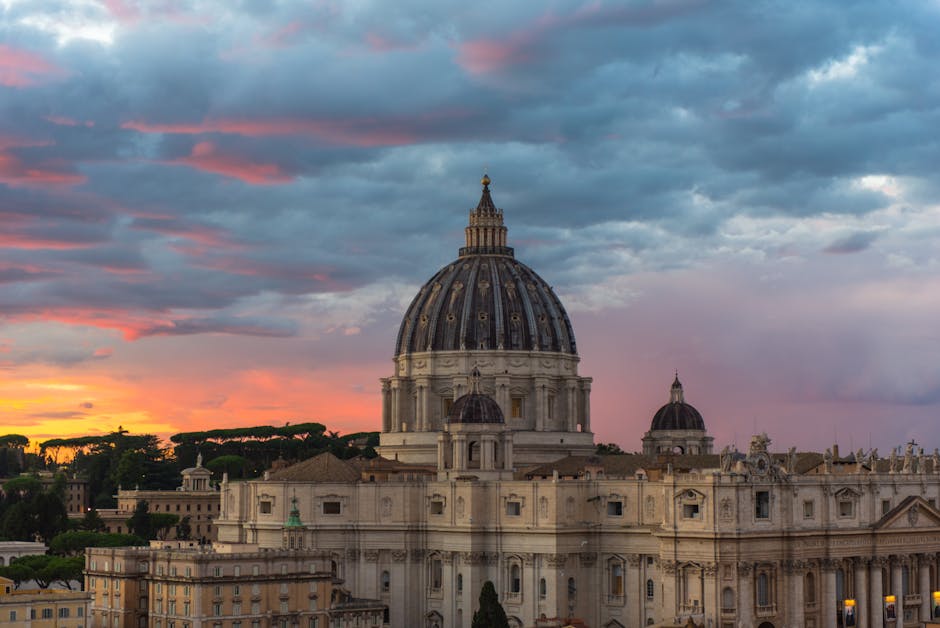
In any well-built structure, the framework is essential. It provides stability, ensures every part is rightly ordered, and gives confidence to those who dwell within. The Church, in her wisdom, relies on a framework of governance and canonical procedure to ensure her mission is carried out with justice, transparency, and accountability. While discussions of decrees and appeals from Vatican dicasteries may seem distant from the daily life of a parish, they are the very scaffolding that supports a healthy and ordered community.
These formal processes are a reminder that the Church takes seriously the command to act with both truth and charity. When a decision is made according to established norms, it is a sign of a commitment to due process, respecting the dignity of every person involved while safeguarding the integrity of our communal life. For pastors and parish leaders, this is a model for shepherding with clarity and care. For the laity, it builds a quiet confidence that the Church is a house built on rock, not sand, with procedures designed to heal divisions, clarify truth, and foster communion. It is a powerful expression of institutional humility and prudence.
He has told you, O man, what is good; and what does the LORD require of you but to do justice, and to love kindness, and to walk humbly with your God?
Micah 6:8
This commitment to a just order is not merely bureaucratic; it is profoundly pastoral. It creates the conditions for trust to flourish, allowing the work of evangelization and mercy to proceed on solid ground. When the faithful see that their leaders are bound by the same principles of fairness they are called to live by, the entire Body of Christ is strengthened.
Virtue as the Workshop of the Soul
If governance provides the framework, then virtue is the interior work of finishing the house, making it a place of beauty, warmth, and welcome. Among the virtues, chastity is often misunderstood in our modern world, viewed as a restriction rather than a liberation. Yet Catholic ministries that accompany the faithful remind us that chastity is a powerful and positive virtue that heals, strengthens, and restores the human person. It is not fundamentally about what we renounce, but about what we embrace: an integrated life where our desires and relationships are ordered toward the authentic good of ourselves and others.
This vision of chastity speaks to a universal human longing for wholeness. It is the practice of ordering our loves rightly, placing God first and loving others with a generosity that respects their inherent dignity. This virtue builds the soul’s capacity for true friendship, sacrificial love, and genuine freedom from the tyranny of disordered passions. In a culture that often reduces relationships to utility or pleasure, chastity is a radical witness to God’s beautiful design for human flourishing. Parishes, schools, and families are called to be workshops where this virtue is taught and practiced, not as a sterile set of rules, but as a joyful path to becoming the person God created us to be.
Finally, brothers, whatever is true, whatever is honorable, whatever is just, whatever is pure, whatever is lovely, whatever is commendable, if there is any excellence, if there is anything worthy of praise, think about these things.
Philippians 4:8
This formation is a communal effort. It requires patient accompaniment, clear catechesis, and a culture of support that helps people navigate complex questions with hope. By reclaiming chastity as a source of strength, we empower one another to live in the freedom of the children of God.
Opening Doors to Prayer in the Public Square
A house of faith is not meant to be sealed off from the world. The Gospel calls us to be a city on a hill, a light that illuminates the public square. This witness includes the simple, profound act of prayer. The affirmation of the constitutional right for students and staff to pray in public schools serves as a vital reminder for Catholic families and educators. Our faith is not a private hobby to be confined within the walls of a church or home; it is an integral part of who we are, and it has a place in our civic life.
You are the light of the world. A city set on a hill cannot be hidden.
Mt 5:14
This freedom, however, comes with a profound responsibility. Our public prayer should be an act of reverent witness, not provocation. It is an invitation, not an imposition. In a pluralistic society, our call is to model prayer in a way that respects the consciences of all, demonstrating that faith enriches public life rather than diminishing it. For Catholic schools, this means forming students who can pray with confidence and also engage in respectful dialogue with peers of different beliefs. For families, it means cultivating a natural habit of prayer that children can carry with them into their classrooms, sports teams, and friendships. This quiet, dignified presence is a powerful form of evangelization, showing the peace that faith can bring to a busy and often anxious world.
Putting Principles into Practice
Living out these dimensions of our faith requires intentional effort. The following table offers concrete ways to integrate justice, virtue, and witness into various aspects of our lives.
| Practice | Where to Apply | Why It Serves the Common Good | First Small Step |
|---|---|---|---|
| Seeking Truth with Charity | Family disagreements, parish meetings, online discussions | Upholds personal dignity and fosters understanding rather than division. | Before speaking or typing, ask: Is what I am about to say true, kind, and necessary? |
| Upholding Just Procedures | Catholic-owned businesses, ministry leadership, school boards | Ensures fairness, builds institutional trust, and prevents arbitrary decisions. | Read the conflict resolution or HR policy for an organization you are part of. |
| Practicing Virtue Proactively | Personal habits, family life, youth formation programs | Forms strong character and leads to authentic freedom and healthier relationships. | Choose one small, consistent act of self-discipline for a week, like limiting screen time. |
| Reverent Public Witness | Workplace cafeterias, schools, community gatherings | Shares the light of faith in an invitational way that respects others. | Quietly say grace before eating a meal in a public setting. |
| Patient Accompaniment | Friendships, mentoring, parish ministry | Reflects Christ’s mercy and honors each person’s unique journey. | Ask someone about their perspective and listen fully without planning your response. |
Here is a short checklist to help you begin building a more integrated life of faith:
- In your family, discuss one way you can better support each other in living a life of virtue.
- Familiarize yourself with your local public school’s policies regarding religious expression and prayer.
- Identify one procedure at your workplace or in a volunteer organization that could be made more just and merciful.
- Schedule time for prayer not only in private but also as a family before heading out into the world.
- Learn more about the basic structures of governance in your own diocese to better understand how the Church works to ensure order and justice.
By tending to the structures of justice, cultivating the garden of virtue in our souls, and opening the doors of our hearts to prayerful public witness, we participate in God’s ongoing work of creation. Each act of integrity, no matter how small, contributes to building a society where the dignity of every person is honored and the common good is served. This is our call and our joy as Catholics: to build a faithful house where Christ’s light can shine brightly for all the world to see.